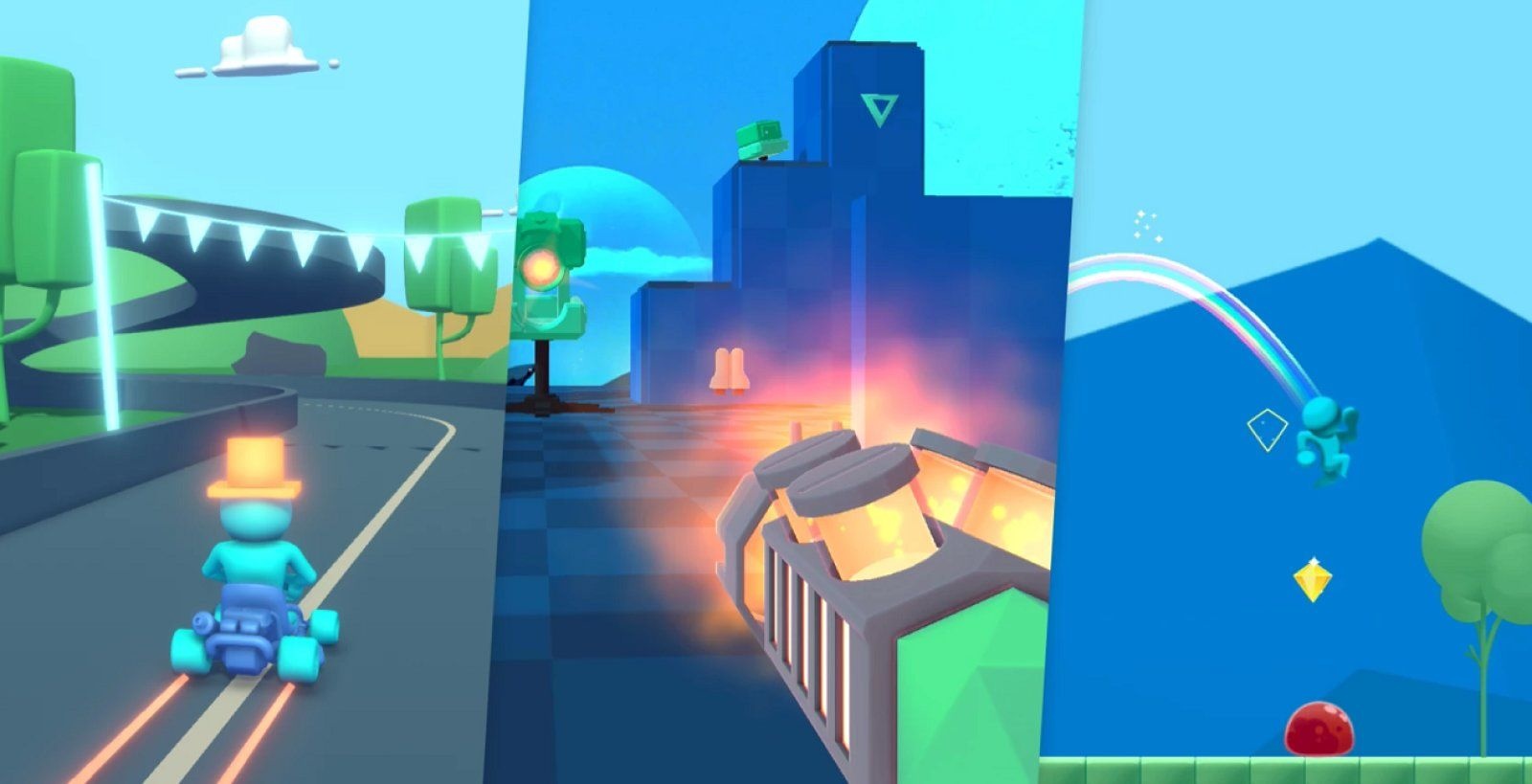
Pixel Byte a Unity game development company that turns creative ideas into real-life experience games. We use our extensive experience in this cross-platform game engine to capture the overall players' imagination in 2D, 3D, VR, and AR games.
If you are looking for the right partner to work on Unity game development, we are glad to discuss your project requirements and provide you with initial estimations and production schedule upon request.
Unity game development is a complex process that covers, mobile, PC and console, VR and AR development of games on the basis of the Unity platform. It offers a robust and well-developed ecosystem that is highly appreciated by developers globally. For comparison, 52% of mobile app development is powered on the basis of the Unity engine, 60% of VR and AR, and 99% of all indie games.
Unity has various tools, features and constant updates to its developers in store, which helps in producing high-loaded games with extreme resolutions and great performance. Moreover, the platform is free, agile, and, hence, resulted in the emergence of a strong user's community.
As it is cross-platform, its operational systems range from iOS to PS4, as well as from Windows Mixed Reality or Android TV ones. Unity makes it possible to develop both simple and complex games, as it is highly scalable.
As much as world-open the platform might be, it lacks a lot of useful features. So, developers often take it on to program a new one, specifically for their project requirements. However, since Unity allows for language scripting, this task is easily accomplished by well-experienced developers.
Building a Unity game development workflow is not easy to tackle, it is complicated with different obstacles, should it be code flaws or concept gaps. Yet, there is a standard set of development stages necessary for successful game production and launch.
Why do companies tend to choose outsourcing Unity game services over building up an in-house team? What a decade ago was considered to be risky, today is self-explanatory and efficient for any company in any domain.
An initial push to outsource developing services was high costs and an immense lack of talents in the native country. On the contrary, globalization and an opening market of booming developing countries, like Ukraine or Belarus, for instance, attracted by its professional and enthusiastic IT Unity game developers at affordable prices.
Not only the costs became appealing, but also the level of management sophistication in these countries. The hiring process, project management, foreign language skills of developers became highly competitive and altogether good reasons to shake hands with an outsourcing company.
The reasons to extend your game development department or hire a team in Ukraine are numerous. The recent policy and overall market conditions have laid the ground for industry booming, emerging of highly skilled developers, designers and artists, reasonable and comparatively low costs and, in general, favorable business infrastructure.